Seats That Looked Beyond Saving.
Restored to Factory Clean.
A 2022 Toyota Corolla arrived with rear seats covered in heavy organic contamination — embedded pet hair, dried organic matter, deep staining, and years of accumulated grime ground into the fabric. What most car washes turn away, DShine eliminates. Here's exactly how.
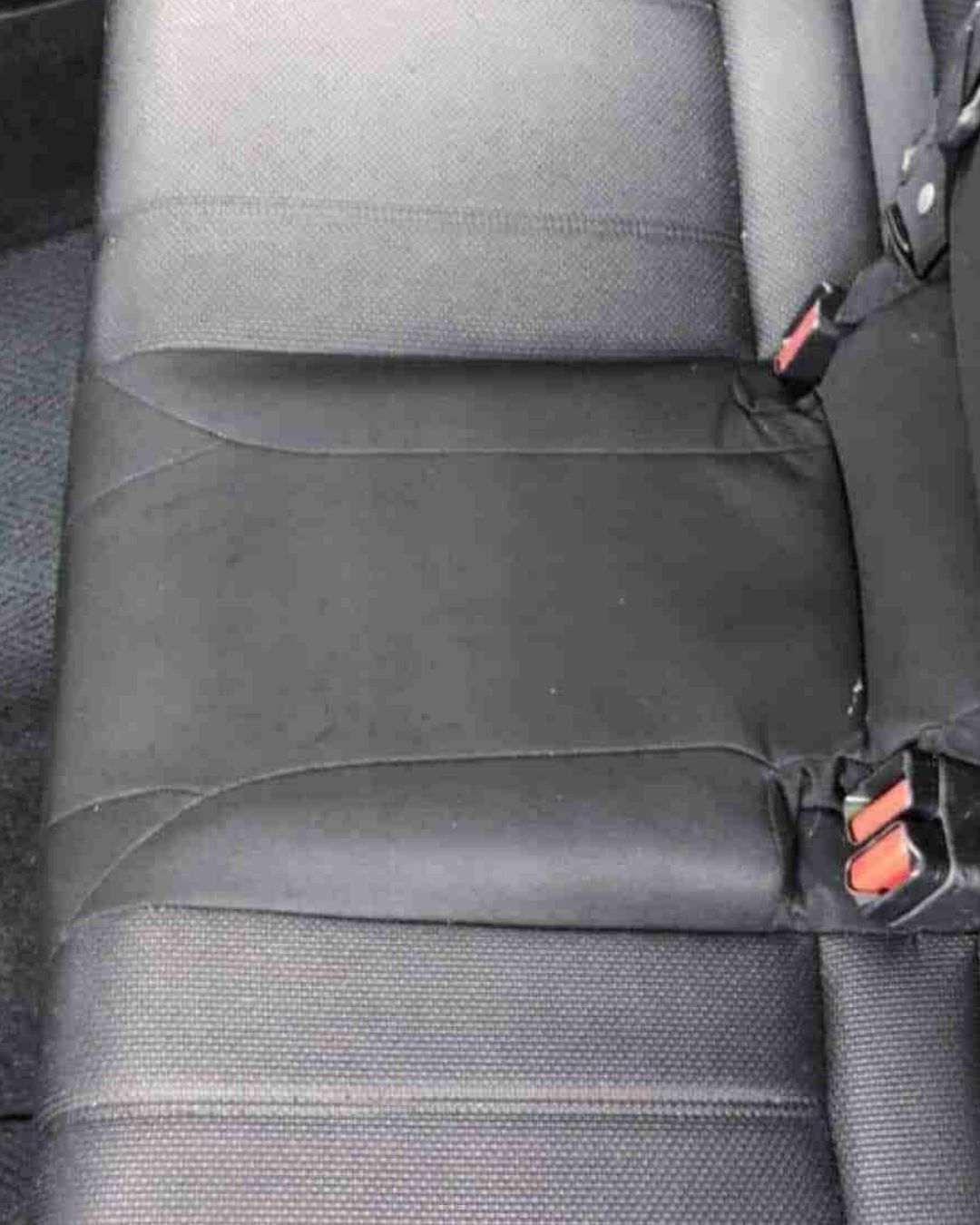
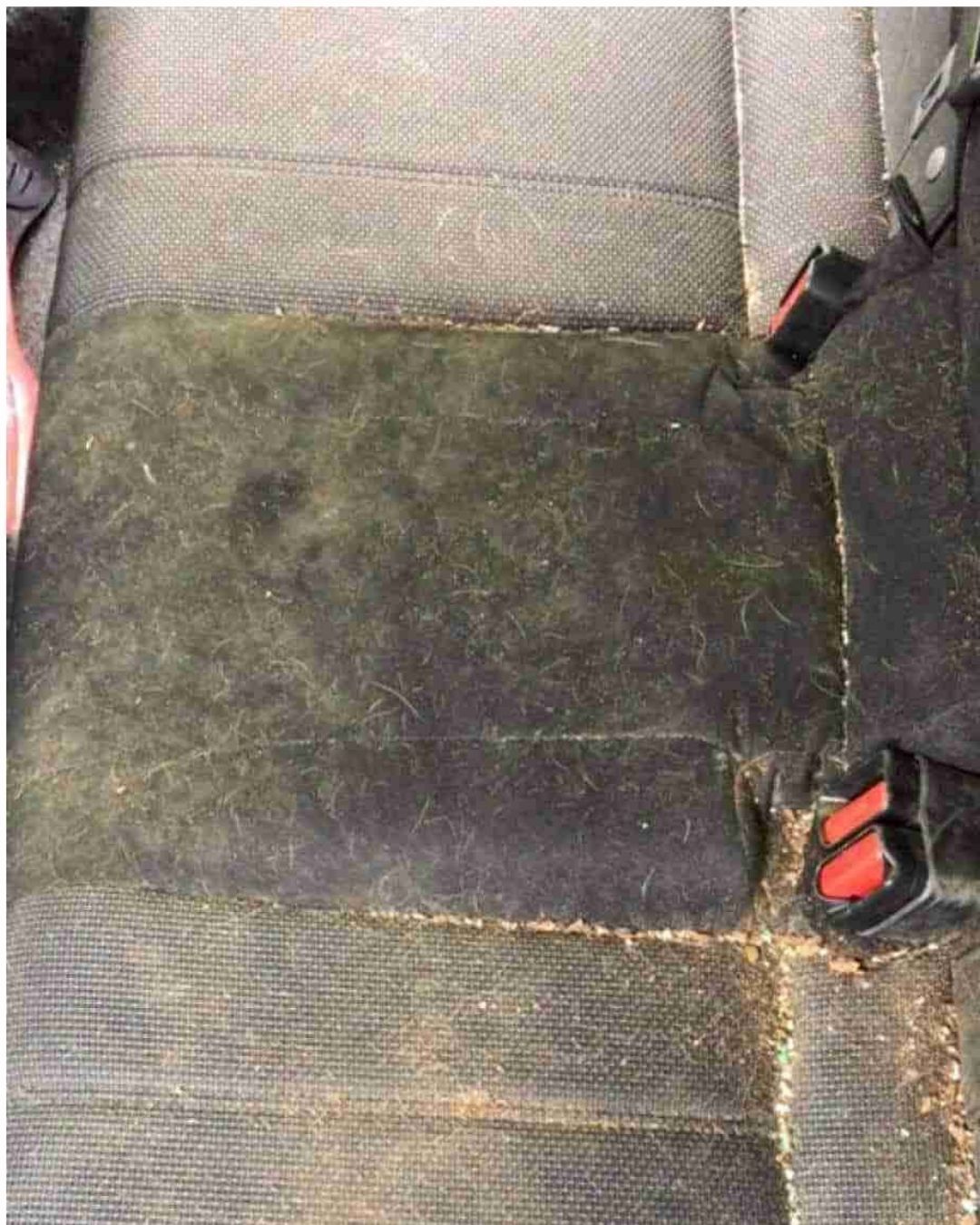
Years of Organic Contamination Ground Into the Fabric
Daily use, pets, food, and South Florida's heat create a perfect environment for contamination to build up inside a car's fabric seats. On this 2022 Toyota Corolla, the rear seat fabric had accumulated layers of pet hair deeply woven into the textile, dried organic matter, liquid stains, and general grime ground in by repeated contact — the kind of buildup that forms when a vehicle goes without professional cleaning for an extended period.
The problem with heavy seat contamination is not just visual. Pet hair embeds itself below the surface fiber layer — it cannot be removed by vacuuming alone. Organic matter trapped in fabric begins to break down over time, producing odors and providing a substrate for bacteria and mold spores to colonize. In South Florida's heat and humidity, this process accelerates significantly compared to drier climates.
Standard car washes and foam sprays address surface-level dirt only. Removing deeply embedded contamination requires mechanical agitation of the fabric, heat-based extraction, and multiple treatment passes — each targeting a different layer of buildup. The before photo shows exactly what years of untreated daily use looks like on fabric seats. The after photo shows what a proper deep clean protocol achieves.
Why Regular Vacuuming Isn't Enough
A standard vacuum removes loose surface debris — but pet hair wraps itself around individual fabric fibers and cannot be lifted by suction alone. Stains that have dried and bonded to the fabric require chemical pre-treatment to break the bond before extraction. Without agitation and heat, most of the contamination visible in the before photo would remain after a standard interior vacuum and wipe-down.
Agitate. Pre-Treat. Extract. Finish.
Pet Hair Extraction
Before any wet treatment, all embedded pet hair was removed mechanically. A rubber bristle agitation tool was worked across the full seat surface in overlapping passes — the rubber creates static charge that pulls hair fibers up and out of the weave, gathering them for vacuum removal. This step must happen before any moisture is introduced — wet pet hair mats deeper into the fabric and becomes significantly harder to remove. Multiple vacuum passes followed until the dry surface was clear.
Chemical Pre-Treatment
With the dry contamination removed, an enzyme-based fabric pre-treatment solution was applied across all contaminated seat surfaces. Enzyme cleaners break down organic matter at a molecular level — dissolving the bond between dried biological material and the fabric fiber before mechanical extraction begins. The solution was worked into the seams and bolster creases with a stiff detailing brush, and allowed to dwell for full contact time to activate on the deeper stain layers. This stage is what makes the difference between lifting surface dirt and truly removing embedded contamination.
Deep Steam Extraction
Hot water extraction was performed across all treated seat surfaces — seats, seams, and bolsters. The high-temperature steam penetrates below the surface fiber layer, activating the pre-treatment chemistry and simultaneously flushing the dissolved contamination out of the fabric weave. Multiple extraction passes were made on each section until the extracted water ran clear — confirming full removal of contamination from the full fabric depth, not just the surface. Seat seams received targeted steam treatment with a narrow nozzle attachment to reach the concentrated buildup in the piping.
Finish & Dry
After extraction, the seat fabric was groomed with a soft brush to restore the textile pile to a uniform direction — preventing the flat, matted appearance that can result from wet extraction. Compressed air was used to clear any remaining moisture from seams and crevices. The full interior was then inspected under strong lighting for any remaining stain zones, with targeted spot treatment applied where needed. Forced air drying was used to accelerate drying time — leaving the seats clean, dry, and ready for use.
Factory Clean. No Trace of What Was There.
The before and after photos tell the complete story. Every stain zone, every patch of embedded pet hair, and all organic contamination was fully eliminated across all three rear seat sections. The fabric texture, color uniformity, and seat seams were restored to the same condition as when the vehicle left the dealership. No chemical residue, no wet smell, no flat matting — just clean fabric.
The client received a maintenance recommendation: a professional deep clean every 4–6 months prevents contamination from bonding permanently to the fabric. Fabric protection treatment — a hydrophobic coating applied to the seat surface — was also recommended to make future cleaning significantly easier by preventing liquid spills from penetrating the fiber layer on contact.
Why Deep Seat Cleaning Needs a Specialist
Surface-level products address surface-level dirt. Embedded contamination requires chemistry, heat, and technique — in the right sequence.
Dry First, Always
Pet hair must be removed mechanically before any moisture is introduced. Wet pet hair contracts and bonds deeper into fabric fibers — making it dramatically harder to extract. Rubber agitation tools create static charge to lift hair strands up and out of the weave. Skipping this step is the most common reason DIY seat cleaning fails to achieve clean results.
Break the Bond Before Extracting
Dried organic stains are chemically bonded to the fabric fiber. Standard foam cleaners can break surface tension but cannot dissolve this bond. Enzyme pre-treatment works at a molecular level to disassemble the organic compounds, separating them from the fiber so hot water extraction can physically remove them. Without this step, extraction pushes stains deeper rather than lifting them.
Prevention After Restoration
Once seats are professionally deep-cleaned, a hydrophobic fabric protection treatment creates a barrier that causes liquids to bead on the surface rather than penetrating the fiber. This makes future spills easy to wipe off before they stain, and dramatically reduces the frequency of deep cleaning required to maintain a clean interior.
No Matter How Bad —
We've Seen Worse.
Pet hair, stains, organic buildup, mold — if it's in your interior, DShine has a protocol for it. Get an instant quote and let's restore your cabin.