Active Mold Colony Inside a Malibu.
Eliminated. Completely.
A 2022 Chevrolet Malibu arrived with active mold covering the seats, carpet, and interior surfaces — the result of South Florida's humidity getting trapped inside a closed cabin. What looks like dirt in a photo is a living biological colony producing allergens and odor. Here's how we eliminated it.
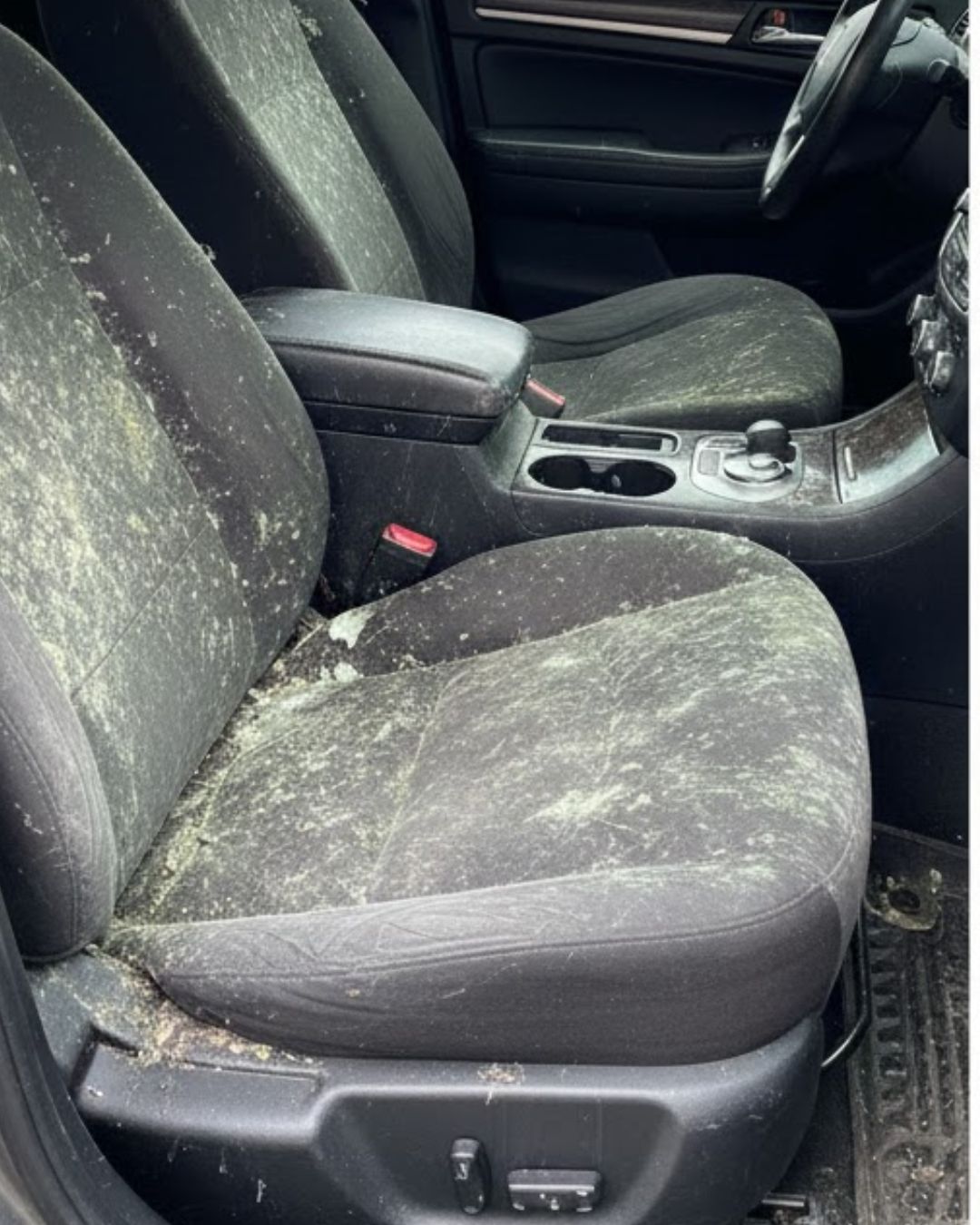
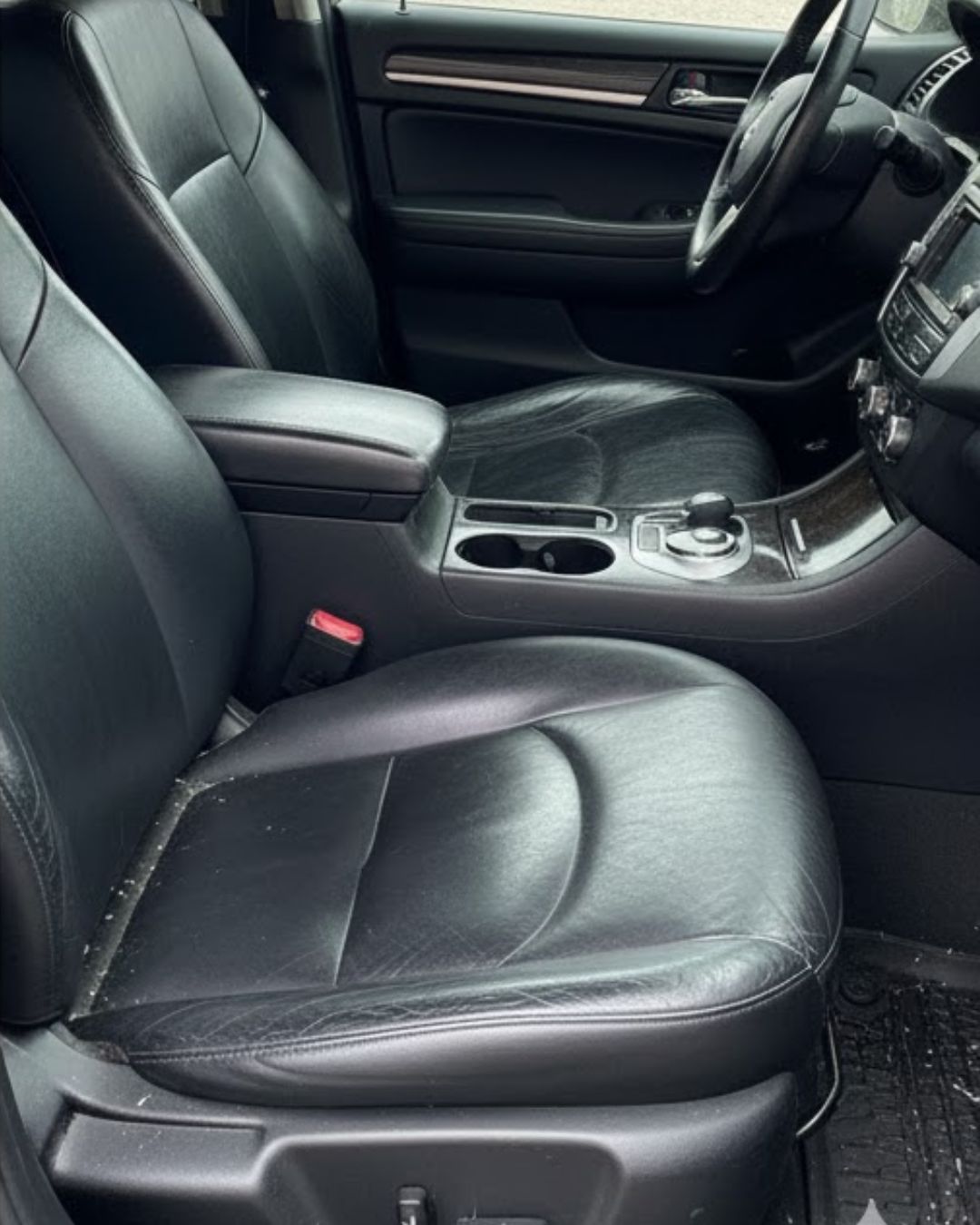
South Florida Humidity Trapped Inside a Closed Cabin
South Florida has one of the most aggressive climates for interior mold in the country. High ambient humidity combined with heat and poor cabin ventilation — a window left cracked during rain, a wet item left inside, or simply a vehicle that sits unused for a few weeks — creates ideal conditions for mold spores to activate, colonize, and spread rapidly across fabric seats, carpet, and soft trim surfaces.
On this 2022 Chevrolet Malibu, the mold had progressed beyond surface growth into a full active colony covering the front seat fabric, carpet, and door panel upholstery. At this stage the problem is no longer cosmetic — it is biological. Active mold produces mycotoxins and airborne spores that cause respiratory irritation, allergic reactions, and a persistent musty odor that no conventional cleaning product can fully eliminate. The odor itself is a direct byproduct of live mold metabolism — treat the symptom without killing the colony, and the smell returns within days.
The key error most people make is attempting to clean mold-contaminated interiors with standard detailing products. Steam alone does not kill mold. Vacuuming alone spreads spores. Proper remediation requires a sequenced protocol: kill the colony first with antifungal chemistry, extract the dead biological material, then neutralize any remaining spores and odor with ozone — in that exact order.
Why "Air Freshener" Is Not a Solution
Masking a mold odor with fragrance is the most common mistake car owners make. The smell is produced by living mold — not by dirt or residue. Until the biological colony is chemically eliminated and the dead material fully extracted, any air freshener treatment is temporary. Within days the active colony regenerates the odor — and continues producing airborne spores that affect every person inside the vehicle.
Kill It. Extract It. Neutralize It. In That Order.
Colony Elimination
The first step is the one most DIY attempts skip — and the reason they fail. A professional-grade antifungal and antimicrobial solution was applied across all contaminated surfaces: seat fabric, carpet, door panels, and headliner. The solution was worked into the fabric with a soft brush to ensure penetration below the surface fiber layer, then allowed to dwell for full contact time — killing the active mold colony at the root before any extraction begins. Extracting a live colony without killing it first spreads spores throughout the cabin and into the HVAC system.
Deep Steam Extraction
With the colony neutralized, hot water extraction was performed on all fabric surfaces — seats, carpet, and carpet padding. The high-temperature steam penetrates below the surface fiber into the padding layer where subsurface mold and moisture accumulate — the layer that surface sprays and wipe-downs never reach. This stage physically removes the dead biological material, the chemical residue from the antifungal treatment, and the underlying moisture that created the mold environment. Multiple passes were made on each section until extraction water ran clear — confirming full contamination removal from the fabric depth.
Full Interior Surface Restoration
Following extraction, all hard interior surfaces — dashboard, center console, door panel hard trim, cup holders, and vents — were cleaned with antibacterial interior cleaner. Vents received particular attention as mold spores can enter the HVAC system and redistribute through the cabin when air conditioning runs. Glass was polished inside, and all vinyl and plastic surfaces were treated with a UV-protective dressing to restore the material and prevent future moisture absorption on trim surfaces.
Ozone Deodorization & Final Spore Neutralization
The final and essential step: an industrial ozone generator was run inside the sealed cabin for a controlled treatment period. Ozone (O₃) is one of the most effective agents for eliminating airborne mold spores and organic odors — it penetrates into areas no spray or cloth can reach, including HVAC ducts, under-seat cavities, and deep carpet backing. This step destroys the musty odor at a molecular level — not masking it, but oxidizing the organic compounds that produce it. After ozone treatment the cabin was ventilated and inspected — zero odor detected.
Clean Cabin. Zero Mold. Zero Odor.
When the Malibu was completed, the interior was inspected visually and by smell — no mold growth visible on any surface, no musty odor detectable anywhere in the cabin. The seat fabric, carpet, and all trim surfaces were clean, dry, and biologically neutral. The vehicle was safe to drive and occupy without respiratory risk — the cabin restored to the condition it was in before the mold colony took hold.
The client received a full maintenance protocol: keep all windows fully closed when parked, run the AC periodically to keep cabin moisture low, and address any wet items left in the car immediately. Mold returns if the moisture source isn't resolved — professional elimination solves the existing colony; prevention stops the next one from forming.
Why Interior Mold Requires a Specialist
Interior mold is a biological problem, not a cleaning problem. Standard detailing products and techniques are not designed for it — and can make it worse.
Sequence Is Everything
Vacuuming or steam-cleaning a live mold colony without applying antifungal chemistry first aerosolizes live spores — spreading them into the HVAC system, headliner, and carpet backing where they will recolonize. The colony must be chemically neutralized before any mechanical extraction begins. This is why DIY mold treatments fail within weeks.
The Odor Lives Where You Can't Reach
Mold odor is produced by organic compounds that penetrate into carpet padding, seat foam, door cavity insulation, and HVAC ductwork. No spray-and-wipe treatment reaches these areas. Industrial ozone generation is the only method that fills the entire cabin volume — including hidden cavities — to neutralize odor at the molecular level.
Moisture Is the Root Cause
Mold cannot grow without moisture. In South Florida the most common sources are windows cracked during rain, wet beach gear or clothing left in the car, air conditioning condensation, and vehicles that sit unused for weeks without ventilation. Eliminating the moisture source after professional remediation is the only way to prevent recolonization.
Your Cabin Can Be
This Clean Again.
Whether it's active mold, persistent odor, or deep seat contamination — proper remediation eliminates what air fresheners and car washes can't touch.